Protective coating applied to industrial concrete and steel surfaces
Industrial Asset Protection and Surface Coatings

Industrial Protective Coatings and Linings

Preparation and substrate condition determine service life

The most technically advanced coating system will fail prematurely if applied to an inadequately prepared, contaminated or structurally defective substrate. Substrate assessment before specification is not a preliminary — it is the specification.

Industrial protective coatings are selected according to substrate type, exposure conditions, movement, wear, chemical contact, temperature range and operational requirements — not by attaching a generic 'industrial-grade' label to a standard coating. Waterproofing, corrosion…

The Problem

Industrial assets — factories, warehouses, plant rooms, processing facilities, production areas, workshops, distribution buildings, service corridors, utility areas, loading bays, bunds and external structures — present protective-coating requirements that differ fundamentally from decorative or commercial painting. The consequences of the wrong coating, omitted preparation, inadequate substrate repair or a specification mismatch are not cosmetic: premature coating failure in a production environment leads to unplanned maintenance shutdowns, structural deterioration that continues beneath the surface, and replacement costs that are multiples of the original programme.

PROTECTIVE FUNCTIONS — THE CRITICAL DISTINCTION

Industrial protective coating work spans several distinct protective functions. These must be separately identified and specified. No single product provides all of them.

Protective topcoat: protects and finishes a prepared surface where the documented substrate compatibility, exposure conditions and application requirements are satisfied. A topcoat is not a waterproofing membrane. A topcoat is not a wearing layer. Rocathaan TopSpray35 is a two-component aliphatic UV-stable spray-applied protective topcoat for suitable prepared concrete, steel and compatible coated surfaces. It is applied by airless spray only. It is not a standalone waterproofing system. No elongation value is published in the available TDS.

Industrial floor coating and wearing surface: designed to withstand the defined pedestrian, operational or mechanical wear conditions of the specific floor area. A wearing surface is specified from its abrasion resistance, wear rating, chemical exposure, the required return-to-service stages and the complete approved build-up. ProFast Flooring is an autocatalytic polyurea-combination floor coating — aliphatic, UV-proof, and confirmed in its PDS for warehouses, distribution centres and production facilities. Its precise loading, chemical and primer requirements depend on the applicable system sheet for the project.

Waterproofing membrane: provides a continuous barrier against water ingress where the approved specification supports that role. Monoseal is a cold-applied hand-applied waterproofing membrane for concrete and mineral substrates. Rocathaan HotSpray PA 260-FR is an aromatic pure-polyurea membrane for confirmed specialist waterproofing and protective applications. Its primary PDS description is a seamless roofing system — its precise industrial role, substrate, primer, thickness and exposure requirements must be confirmed from the relevant application documentation and approved project specification.

Chemical-resistant lining: selected against the identified chemical, concentration, temperature, contact duration and immersion or splash pattern. Chemical resistance is always product-specific, concentration-specific, temperature-specific and exposure-duration-specific. No general claim of resistance to 'acids', 'alkalis', 'fuels' or 'solvents' should be accepted without reference to specific test data.

Corrosion-protection system: protects prepared metal substrates using a compatible specified build-up — correct rust treatment, primer and topcoat in the correct sequence. A coating does not restore lost section thickness or structural capacity.

Concrete repair: restores defective concrete to a sound substrate before any coating or waterproofing is applied. Concrete repair is a precondition for a coating system — not a component of it.

Classified fire-rated surface coating: a separately tested and classified system used only within its documented substrate, thickness, fire-performance scope and applied by a trained operative. Prokol FireGuard Pro 200 achieves fire class A2-s1,d0 (EN 13501-1:2007+A1:2009, Classification Report No. 18831B — Warrington Fire Gent) — the highest classification for organic coating materials under EN 13501-1. It is not an intumescent coating and does not provide structural steel fire resistance or minutes-of-resistance ratings.

Joint and movement treatment: deals with static cracks, construction joints, movement joints and substrate transitions. High elongation in a membrane does not automatically prove suitability for every active crack or movement joint. Movement joints must remain capable of performing their designed function unless an approved detail provides another engineered solution.

INDUSTRIAL ENVIRONMENTS

The industrial sectors where protective coatings are most commonly required include: factories and manufacturing areas; warehouses and distribution facilities; plant rooms; service corridors; utility areas; workshops; production spaces; concrete structures and frames; steel structures; loading and operational areas; internal walls and upstands; external industrial building envelopes; and bunds or containment areas where the chemical and immersion suitability of the selected system has been verified.

Roof and cladding assets are addressed through the dedicated application pages — Industrial Roof Refurbishment, Metal Roof Coatings — and are not duplicated here.

SUBSTRATES

The substrates most commonly encountered in industrial protective-coating work include: concrete (cast, precast, block, screed); cementitious screeds; masonry and mineral substrates; carbon steel; galvanised steel; aluminium; existing compatible coatings; and previously repaired concrete. A substrate name alone does not prove that a coating is suitable for it. Assessment may require: identification and testing of existing coatings; pull-off adhesion testing; moisture testing; contamination assessment; surface-strength testing; concrete repair; corrosion assessment; test areas; primer trials; and written manufacturer confirmation.

Before You Specify
  • Substrate survey required before specification — not optional
  • Application by trained approved applicators is a warranty condition
  • Coating over a failing or saturated substrate will fail — usually within a year
  • Preparation shortcuts invalidate manufacturer warranties
System Pathways

The Right System for This Application

Prokol

Rocathaan TopSpray35 — Aliphatic UV-Stable Protective Topcoat

TopSpray35 is a two-component, spray-applied, solvent-containing protective topcoat based on an aliphatic isocyanate hardener. It is UV resistant and is intended for suitable prepared steel, concrete and compatible polyurea, polyurethane and epoxy systems. Applied by airless spray only. Minimum 2 coats. Usage: 0.15–0.30 kg/m²/layer. Surface temperature: +5°C to +35°C. Product temperature: +10°C to +35°C. RH <85%. Surface and uncured product at least 3°C above dew point. Potlife approximately 30 minutes at 20°C. Reference cure stages (approximate, affected by environmental conditions, product temperature, relative humidity and layer thickness): walkable after 12 hours at 20°C. Recoat approximately 12–24 hours — exceeding the maximum requires sanding and re-priming. Mechanical resistance after approximately three days. Chemical and water resistance after approximately seven days. These are application-sequencing references — not building-handover or operational-reopening times. TopSpray35 is not a standalone waterproofing membrane. It is not a wearing layer. No elongation value is published in the available TDS. No traffic-bearing performance is established. No warranty year is stated in the TDS. Available in RAL colours according to the manufacturer's current colour overview; other colours may be available on a project basis and by request. HACCP-suitable for walls where HACCP applies. Non-thermoplastic. Any warranty position is project-specific and depends on the substrate, preparation, complete system build-up, application records and manufacturer acceptance. Primer requirements depend on the specific substrate and build-up and must be confirmed from the manufacturer's current specification.

View Full System

ProFast Flooring — Industrial Flooring and Wearing-Surface System

ProFast Flooring is an autocatalytic floor coating based on polyurea combinations, developed for suitable indoor and outdoor floors. The PDS directly identifies warehouses, distribution centres and production facilities as target environments. Also confirmed for walkways, balconies, terraces and stairwells. ProFast Flooring is aliphatic — colour-fast and UV-proof, suitable for both internal and external floor applications. Taber wear resistance: 80 mg at 1,000 cycles using a 1,000 g load and CS17 wheel, as stated in the current PDS. The manufacturer separately states wear and scratch resistance up to three times greater than traditional epoxy and polyurethane flooring systems. Available as smooth, decorative and anti-slip systems — system type confirmed per project. Application: trowel, squeegee, roller or brush. Usage: 0.15–0.30 kg/m²/layer. 100% volume solids. Surface temperature: -10°C to +30°C. Product temperature: +10°C to +25°C. RH: 35–85%. Reference cure stages under stated PDS conditions: • Walkable: approximately 1 hour at 20°C; approximately 45 minutes at 25°C • Mechanical resistance: approximately 2–3 hours • Chemical resistance: after approximately 3 × 24 hours These are PDS reference stages at the stated temperatures — they are not automatic authorisation for full operational loading. Pedestrian walkability at approximately one hour does not mean the floor is ready for equipment, production machinery or vehicle loading. Operational readiness must be confirmed from the applicable system sheet and the complete approved build-up. The PDS notes that application without a primer is possible in many circumstances, but the final primer requirement must be confirmed from the substrate condition and the applicable ProFast system sheet. Maximum concrete moisture: 10% by weight. Adhesion strength: dry mineral >5.5 MPa; moist mineral >2.2 MPa. The approved system must define substrate preparation, primer requirements, finish type, anti-slip option where required, and the return-to-service stages for the specific operational loading and environment. Forklift, vehicle and production-equipment loading requirements must be confirmed from the relevant system sheet — not inferred from the walkable time alone. No warranty year stated in PDS.

Request ProFast System Information
Prokol

Rocathaan HotSpray PA 260-FR — Specialist Aromatic Pure-Polyurea Membrane

Rocathaan HotSpray PA 260-FR is an aromatic pure-polyurea membrane for suitable specialist waterproofing and protective applications. Its primary PDS description is a seamless roofing system for new and existing roofs, polyurethane spray foam and other suitable substrates, subject to the relevant application documentation. PA 260-FR is not a default industrial coating for factory walls, floors, bunds or general steel protection. Its precise industrial role, substrate, primer, thickness, exposure and finishing requirements must be confirmed from the relevant application documentation and the approved project specification. PA 260-FR is AROMATIC — it will yellow and darken under UV. Where colour stability or surface appearance matters, a compatible aliphatic UV-stable finish must be confirmed from the approved specification. ±1900% elongation (DIN 53504). High elongation does not automatically prove suitability for every active crack or movement joint. Reaction time 12–15 seconds (initial reaction — not full cure). Tack-free in 30–120 seconds. Mechanical resistance reported from approximately 2 × 24 hours under TDS test conditions at 20°C. This is a product test result — it is not a vehicle-reopening time or an operational-readiness time. Full operational readiness must be established from the complete approved build-up by the manufacturer. Minimum concrete substrate requirements per TDS: 25 N/mm² compressive strength; 1.5 N/mm² bond strength (standard) or 2.0 N/mm² (heavy-duty); moisture <4% by weight; minimum 28 days old. These are minimum substrate requirements — not evidence of traffic-bearing performance. Hot-spray only — requires specialist plural-component equipment and trained approved applicators. No warranty year in TDS.

View Full System

Prokol FireGuard Pro 200 — Classified Fire-Performance Surface Coating

Prokol FireGuard Pro 200 is a high-solid 2K coating based on polyurea combinations. The current PDS cites reaction-to-fire class A2-s1,d0 to EN 13501-1:2007+A1:2009 under Classification Report 18831B (Warrington Fire Gent). The classification must be applied only within the tested and classified product configuration, substrate scope, preparation and dry-film thickness. A2 = limited contribution to fire. s1 = very limited smoke production. d0 = no flaming droplets or particles. This is the highest classification attainable for organic coating materials under EN 13501-1. FireGuard Pro 200 is a fire-rated protective surface coating — not an intumescent system and not structural steel fire protection. It does not provide 30-, 60-, 90- or 120-minute resistance to fire. Confirmed substrate types stated in PDS: mineral surfaces, metals, wood, plasterboard. Confirmed applications: ceilings, floors and walls in public buildings, stairwells, escape routes, facades. The classification applies within the tested substrate and build-up — not automatically to every listed substrate without appropriate preparation. Required dry film thickness: approximately 140–160 microns, with approximately 150 microns identified as the optimum in the PDS. Application methods: trowel, squeegee, spraying gun, air mix. Hand-applied: 2 layers always. Spray: 1 layer. Usage: 0.20–0.25 kg/m²/layer. Potlife approximately 30 minutes. Dust dry in approximately 45 minutes at 20°C. Recoatable after approximately 4 hours. Chemical resistant after approximately 4 × 24 hours. RH range: 35%–90%. The PDS describes primerless application, but the required preparation, substrate compatibility and classified build-up must be confirmed for the specific project. Film thickness directly affects the fire classification — application to specification by trained approved operatives is a prerequisite. Diisocyanate training is a regulatory requirement for all applicators (EU REACH Annex XVII, effective 24 August 2023). FireGuard Pro 200 must be specified as part of the building's fire strategy. No warranty year stated in PDS.

View Full System
Applied in the Field
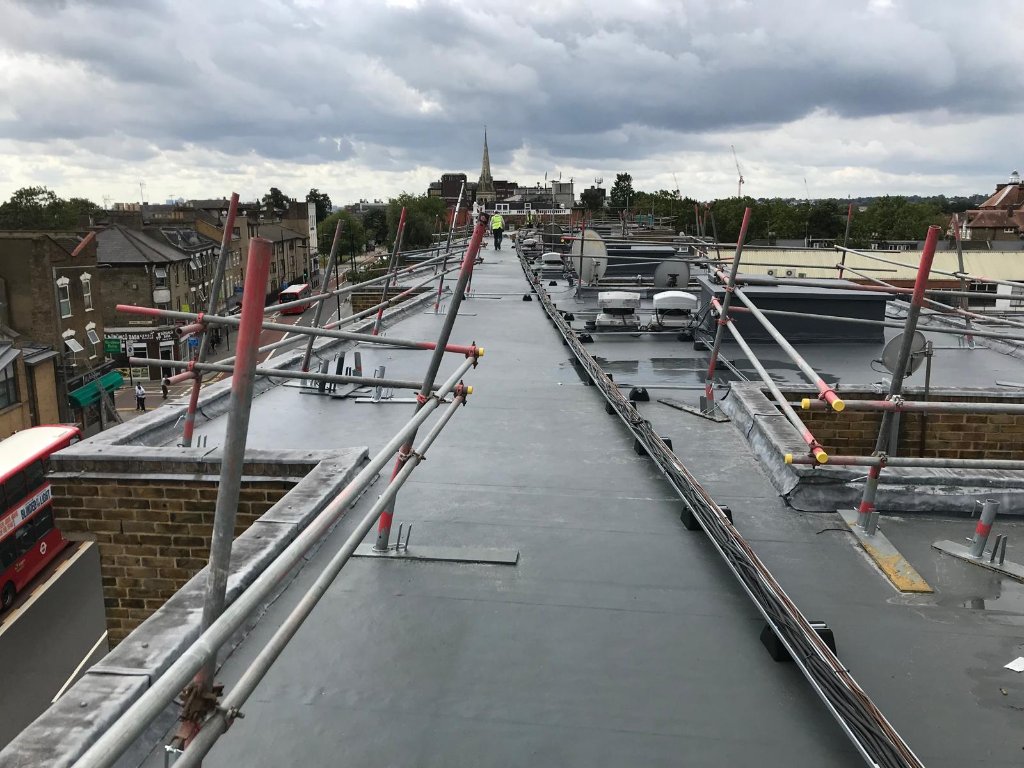
Hot-applied polyurea system — industrial concrete substrate

Hot-applied polyurea system — industrial concrete substrate

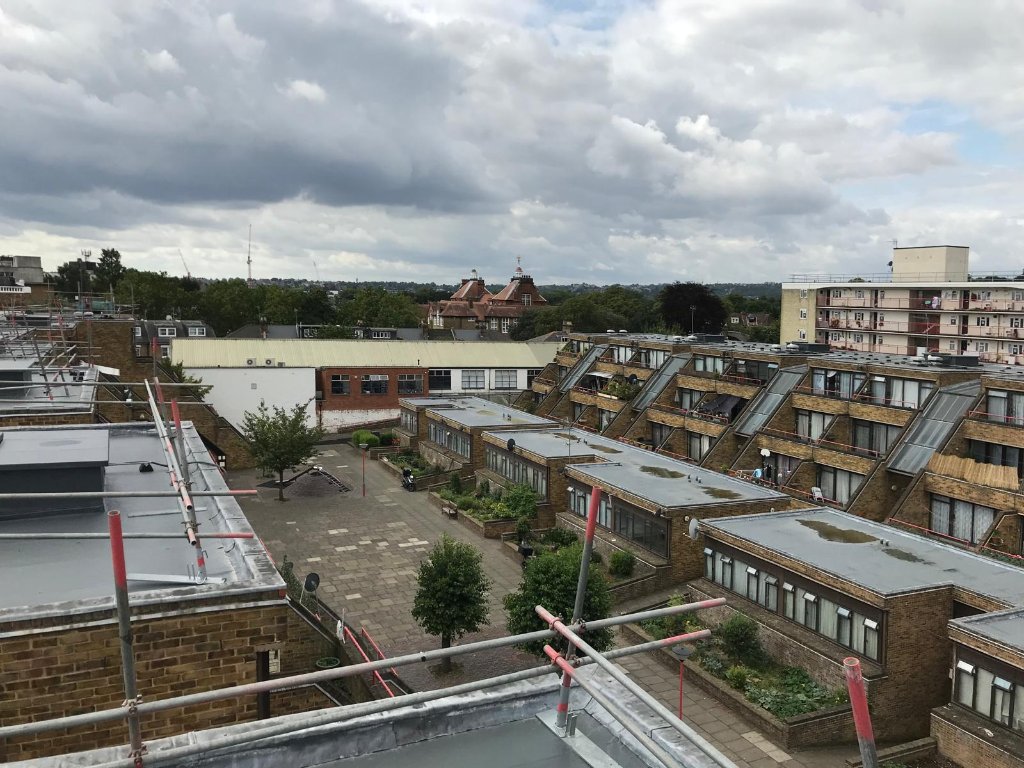
Protective membrane applied across large industrial deck

Protective membrane applied across large industrial deck

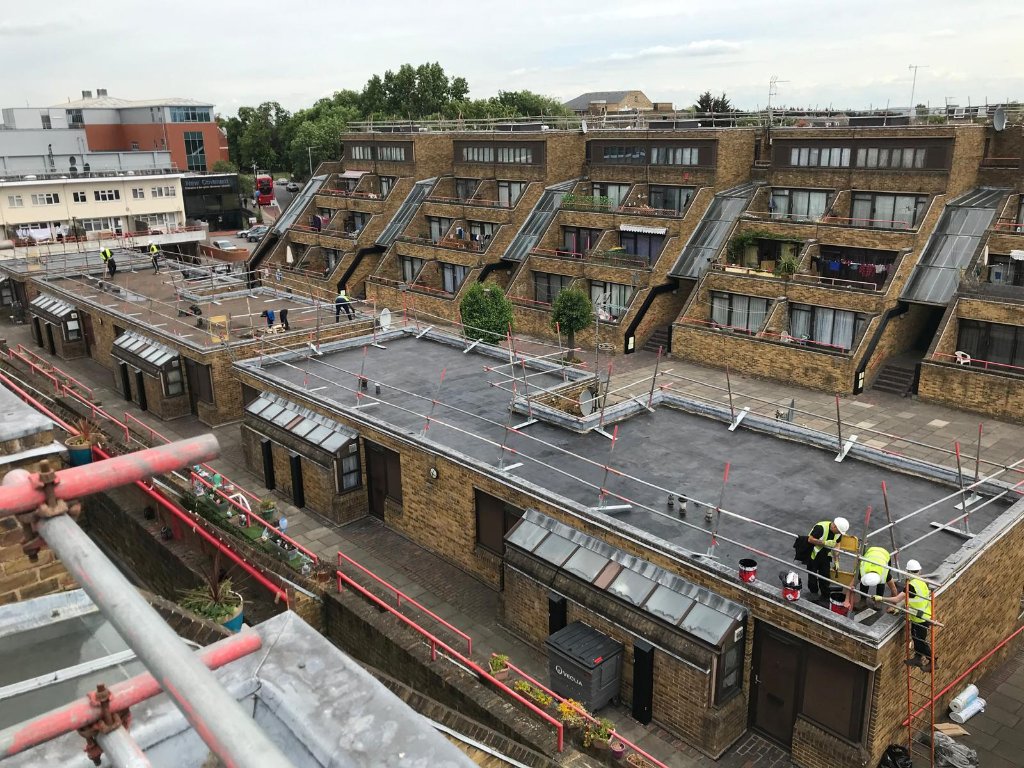
Seamless polyurea — industrial surface protection programme

Seamless polyurea — industrial surface protection programme

Specification Logic

Exposure-Led Selection — Industrial Protective Coating Decision Paths

Industrial coating selection follows from the substrate, the exposure environment and the performance requirement. The paths below illustrate how assessment findings map to system selection. Each path assumes the substrate has been assessed, defects repaired to the required standard, and the substrate confirmed within application limits before any coating proceeds.

Concrete or steel structure requiring UV-stable weather and atmospheric protection — external industrial building elements, exposed concrete, steel structures, facadesUV exposure degrades aromatic coatings rapidly — yellowing, chalking and surface cracking within a few years. An aliphatic UV-stable system is required for long-cycle exterior protection where colour stability, appearance and surface integrity must be maintained over the specified service period.Two-component aliphatic UV-stable spray-applied protective topcoat — confirmed compatible with the substrate and approved build-up. Applied by airless spray. Minimum 2 coats. Substrate prepared and primed where required per manufacturer specification.Rocathaan TopSpray35

Why This System Fits

TopSpray35 is a two-component, spray-applied, solvent-containing protective topcoat based on an aliphatic isocyanate hardener. UV resistant — resists colour change and gloss loss under sustained UV exposure. Available in RAL colours per the manufacturer's current colour overview; other colours may be available on a project basis and by request. Applicable to suitable prepared concrete, steel and compatible coated surfaces subject to project-specific substrate confirmation. Airless spray only. Minimum 2 coats. Surface temperature +5°C to +35°C. RH <85%. Mechanical resistance from approximately three days. Chemical resistance from approximately seven days. Not a standalone waterproofing membrane. No elongation value in TDS. Any warranty position is project-specific and depends on the substrate, preparation, complete system build-up, application records and manufacturer acceptance.

What Still Needs Verifying

Primer requirements must be confirmed against the manufacturer's current specification for the specific substrate type and condition. Adhesion testing on previously coated surfaces is standard practice before committing to a full programme. Where the maximum recoat window (24 hours) is exceeded, the existing coat must be sanded and re-primed before the next layer. Silicone contamination prevents adhesion — must be physically removed before any application. All application by trained approved applicators.

Industrial floor requiring a colourfast, wear-resistant floor coating confirmed for warehouses, distribution centres or production facilities — prepared concrete substrate, pedestrian or light operational use confirmed through the applicable system sheetIndustrial floors in warehouses and production facilities are subject to wear, abrasion, chemical spills and operational traffic. A coating system must be selected according to the confirmed loading class, chemical exposure, substrate condition and return-to-service requirements — not a generic claim.Autocatalytic polyurea-combination floor coating — aliphatic and UV-stable. System type (smooth, decorative or anti-slip), primer, loading classification and return-to-service stages confirmed from the applicable ProFast system sheet and project assessment.ProFast Flooring

Why This System Fits

ProFast Flooring — autocatalytic floor coating based on polyurea combinations. Aliphatic, UV-proof, colour-fast. PDS directly identifies warehouses, distribution centres and production facilities. Taber wear resistance: 80 mg at 1,000 cycles using a 1,000 g load and CS17 wheel (current PDS). The manufacturer separately states wear and scratch resistance up to three times greater than traditional epoxy and PU flooring systems. Available as smooth, decorative and anti-slip systems. Applied by trowel, squeegee, roller or brush. Usage: 0.15–0.30 kg/m²/layer. 100% volume solids. Surface temp: -10°C to +30°C. PDS reference cure stages at 20°C: walkable approximately 1 hour; mechanical resistance approximately 2–3 hours; chemical resistance after approximately 3 × 24 hours. Maximum concrete moisture: 10%. Adhesion (dry mineral): >5.5 MPa.

What Still Needs Verifying

Pedestrian walkability at approximately one hour is a PDS reference stage — it does not confirm readiness for forklift, vehicle or production equipment loading. Operational loading requirements must be confirmed from the applicable ProFast system sheet. Primer requirements depend on the substrate condition and applicable system sheet — the PDS notes application without primer is possible in many circumstances but this must be confirmed per project. Contamination must be fully removed before application. Anti-slip specification must be confirmed from the appropriate ProFast system. No ProFast Flooring product page is currently available — contact Forti Nova for system sheet selection and project assessment.

Walls, ceilings, stairwells or escape routes in industrial, commercial or public buildings where fire class A2-s1,d0 surface performance is required by the fire strategyStandard interior coatings provide no fire performance. The building fire strategy, building regulations or risk assessment requires a fire-rated surface coating at A2 classification on specified substrates within the confirmed substrate and DFT scope.Independently tested and classified fire-rated coating achieving A2-s1,d0 (EN 13501-1:2007+A1:2009) — applied within the tested classification scope, at confirmed DFT, by trained approved applicators with documented diisocyanate training.Prokol FireGuard Pro 200

Why This System Fits

Prokol FireGuard Pro 200 — high-solid 2K coating based on polyurea combinations. Fire class A2-s1,d0 cited in the PDS, independently tested by Warrington Fire Gent, Classification Report No. 18831B (EN 13501-1:2007+A1:2009). The classification applies within the tested and classified product configuration, substrate scope, preparation and dry-film thickness — not automatically to every substrate or build-up. DFT approximately 140–160 microns; approximately 150 microns identified as optimum. Dust dry in approximately 45 minutes. Recoatable after approximately 4 hours. Chemical resistant after approximately 4 × 24 hours. RH 35%–90%. UV resistant (QUV tested). Not intumescent. Not structural steel fire protection. No minutes-of-resistance rating.

What Still Needs Verifying

FireGuard Pro 200 is not intumescent and does not provide 30-, 60-, 90- or 120-minute fire resistance. Its scope is fire-rated surface protection within the tested classification — the fire strategy document must confirm where this classification is required and whether the specific substrate and build-up fall within the classified scope. Film thickness directly affects the classification — application must be to the specified DFT. The PDS describes primerless application but preparation and substrate compatibility for the classified build-up must be confirmed per project. Diisocyanate training is a regulatory requirement. No warranty year stated in PDS.

Not sure if this system fits your project?

Send substrate type, failure description and photos. We'll confirm the right system and flag warranty risks before you commit.

Common Questions

Specification Questions

Technical Enquiry

What are industrial protective coatings?

Industrial protective coatings are liquid-applied or spray-applied systems applied to concrete, steel, masonry and other industrial substrates to provide protection against one or more identified degradation mechanisms — UV exposure, weathering, carbonation, chemical contact, abrasion, wear, corrosion or biological attack. The term covers a range of distinct product types — protective topcoats, floor coatings, wearing layers, waterproofing membranes, chemical-resistant linings and fire-rated coatings — that perform different functions. Selecting the correct system requires identifying the substrate, the exposure conditions, the performance requirement and the operational constraints before specifying a product. A generic 'industrial-grade' product description does not confirm suitability for a specific industrial environment.

What is ProFast Flooring and where is it used?

ProFast Flooring is an autocatalytic floor coating based on polyurea combinations. The ProFast Flooring PDS directly identifies warehouses, distribution centres and production facilities as target environments. It is also confirmed for walkways, balconies, terraces and stairwells. The system is aliphatic — colour-fast and UV-proof — and is available as smooth, decorative and anti-slip variants. The manufacturer's PDS states wear and scratch resistance up to three times greater than traditional epoxy and polyurethane flooring systems. For each project, the applicable ProFast system sheet must define substrate preparation, primer requirements, finish type, anti-slip specification where required, and the return-to-service stages for the specific operational loading. Forklift, vehicle and production-equipment loading requirements must be confirmed from the system sheet — not assumed from the walkable time of approximately one hour at 20°C.

Which industrial substrates can be coated?

The substrates most commonly suitable for industrial protective coating include: concrete (cast, precast, block); cementitious screeds; masonry and mineral surfaces; carbon steel; galvanised steel; aluminium; and existing compatible coatings where adhesion has been confirmed. A substrate name alone does not prove suitability — each has specific preparation requirements, moisture limits, surface-strength criteria and primer specifications that must be confirmed against the approved system. Previously repaired concrete, composite surfaces and coated metal surfaces may require additional investigation, adhesion testing and primer trials before a programme proceeds.

How is the correct protective coating system selected?

System selection follows from the assessment. The questions that must be answered before specification proceeds include: What is the substrate — concrete, steel, masonry? What is its condition — sound, repaired, contaminated, corroding? What is the primary exposure — UV, weathering, chemical splash, abrasion, operational loading, fire performance? What is the required return-to-service time? What are the programme constraints — can the area be isolated during application and cure? What is the operational loading — pedestrian, light equipment, vehicle, production machinery? From these answers, the performance requirements are defined. The product or product combination confirmed against those requirements in the approved manufacturer specification and applicable system sheet is the system selection.

Can damaged concrete be coated?

Concrete defects must be repaired to the required standard before any coating is applied. Spalling, exposed reinforcement, honeycombing, blow-holes, delaminating surfaces and defective construction joints must be cut back to sound concrete and reinstated with compatible repair materials. Where reinforcement is exposed and corroding, it must be cleaned, treated with a corrosion inhibitor and covered with reinstated concrete or mortar before any coating proceeds. Applying a protective coating over unrepaired defective concrete conceals deterioration without arresting it.

Can corroded steel be coated?

Yes, subject to the extent and type of corrosion. Surface and moderate corrosion is addressed through mechanical preparation — wire brushing, grinding or blast preparation — to the required surface cleanliness standard and anchor profile, followed by corrosion treatment and primer. Advancing corrosion that has penetrated to the point of perforation or significant section loss requires local replacement or structural remediation before any coating. A protective coating does not restore lost section thickness or structural capacity. The extent of section loss, perforation and active corrosion must be assessed before specification.

Why is surface preparation important?

Surface preparation determines adhesion, and adhesion determines service life. On concrete: laitance, dust, curing compounds, oil and chemical contamination, existing coatings, moisture and surface weakness prevent adhesion. On steel: mill scale, rust, grease, salt contamination, existing coating incompatibility and insufficient surface profile prevent reliable adhesion. Preparation failures are the leading cause of premature coating failure across all industrial environments — not product quality. Preparation typically includes: mechanical profiling; contamination removal; concrete repair; corrosion treatment; primer application; and test areas before committing to the full programme.

Is moisture testing required before coating?

Yes for concrete substrates. Coatings and primers have documented maximum moisture content limits. For ProFast Flooring, the maximum residual moisture in mineral, concrete or calcium sulphate substrates is 10% by weight. For Rocathaan HotSpray PA 260-FR on concrete, the TDS states maximum 4% by weight. Applying a coating over concrete that exceeds the permitted moisture level can cause adhesion failure, osmotic blistering and delamination. Surface dryness does not confirm internal moisture condition. The measurement method and maximum permitted level must be confirmed from the approved system documentation. On steel, dew-point conditions must be confirmed — coating must not proceed when the surface temperature is within 3°C of the dew point.

Is adhesion testing required?

Pull-off adhesion testing of the primer or coating to the prepared substrate is standard practice before committing to a full programme on any surface where the substrate history is uncertain. A test area — applying the approved system to a representative area, allowing full cure and then testing adhesion — confirms that the specific primer, preparation and coating combination achieves the required adhesion on the actual substrate. If test-area adhesion falls below the required threshold, the preparation regime must be revised before the full programme proceeds.

Does every industrial coating require a primer?

Primer requirements depend on the substrate type, its condition and the approved system. For Rocathaan TopSpray35, primer type and coverage rate must be confirmed against the manufacturer's current specification for the specific substrate. For Rocathaan HotSpray PA 260-FR, the TDS confirms primer is required — the specific primer must be confirmed per project. For ProFast Flooring, the PDS notes that application without a primer is possible in many circumstances, but the final primer requirement must be confirmed from the substrate condition and the applicable ProFast system sheet. For FireGuard Pro 200, the PDS describes primerless application, but the required preparation and classified build-up must be confirmed for the specific project. Primer selection is substrate-specific.

Can existing coatings be overcoated?

Whether an existing coating can serve as a substrate for a new system depends on its condition, adhesion, chemical compatibility and moisture condition. An existing coating that is well-bonded, chemically compatible and dry may provide a usable substrate — confirmed by adhesion testing and chemical compatibility assessment. An existing coating that is blistering, delaminating, of unknown composition or confirmed as silicone-based must be removed or treated before a new coating. Silicone-based sealants prevent adhesion of most coating systems and must be physically removed. Coating over a failed existing coating transfers the failure mechanism to the new system.

How are cracks and movement joints treated?

Static cracks — stable, not exhibiting further movement — can be repaired and treated according to the approved specification before coating. Moving cracks require assessment of the movement amplitude. High elongation in a membrane does not automatically prove suitability for every active crack or movement joint. Movement joints must remain capable of performing their designed function after coating unless the approved detail provides another engineered solution. Bridging an active movement joint with a rigid filler or standard membrane creates a failure point. Construction joints, day joints and wall-to-floor junctions require project-specific detailing.

Are industrial protective coatings chemically resistant?

Chemical resistance depends on the specific chemical, its concentration, temperature, exposure duration, whether the exposure is immersion or splash, the cleaning process, the coating thickness, joint integrity and maintenance. No general claim of resistance to 'acids', 'alkalis', 'solvents', 'fuels', 'oils' or 'process chemicals' should be accepted without reference to specific test data. For Rocathaan TopSpray35, chemical resistance is stated as being reached after 7 × 24 hours cure at 20°C under TDS test conditions. For ProFast Flooring, chemical resistance is reached after approximately 3 × 24 hours. For FireGuard Pro 200, chemical resistance is reached after approximately 4 × 24 hours. Where the anticipated chemical exposure has not been confirmed against the product's resistance data, written manufacturer confirmation is required before specification.

Can industrial protective coatings withstand abrasion and impact?

Abrasion and impact resistance vary between product types. ProFast Flooring has a Taber wear resistance of 80 mg at 1,000 cycles using a 1,000 g load and CS17 wheel, as stated in the current PDS. The manufacturer separately states wear and scratch resistance up to three times greater than traditional epoxy and PU flooring systems. Prokol FireGuard Pro 200 is independently tested for hardness and impact resistance (BS EN ISO 1580, ISO 6272-1). Rocathaan TopSpray35 is described as having high mechanical resistance but no specific abrasion classification is stated in the available TDS. Where a confirmed abrasion classification is required, the requirement must be matched to specific product test data and the applicable system sheet.

Can industrial protective coatings be used outdoors?

Outdoor suitability depends on the system. ProFast Flooring is confirmed in the PDS for both indoor and outdoor applications — aliphatic and UV-proof. Rocathaan TopSpray35 is aliphatic and UV-stable, making it appropriate for external surfaces including facades, external concrete and exposed steel. Rocathaan HotSpray PA 260-FR is AROMATIC — it will yellow and darken under UV. Where PA 260-FR is applied to an exposed external surface, a compatible aliphatic UV-stable topcoat must be confirmed from the approved specification. Application temperature and dew-point requirements apply to all products.

What do UV-stable and aliphatic mean?

UV-stable means the coating resists degradation — yellowing, chalking, loss of gloss and surface cracking — under sustained ultraviolet radiation. Aliphatic refers to the isocyanate hardener chemistry: aliphatic is UV-stable; aromatic is NOT UV-stable. Rocathaan TopSpray35 and ProFast Flooring are aliphatic and UV-stable. Rocathaan HotSpray PA 260-FR is AROMATIC — it will discolour under UV without a suitable aliphatic topcoat. This is a specification requirement on any UV-exposed surface, not a cosmetic preference.

How quickly can an industrial area return to service after coating?

Return-to-service depends on the product, the build-up, the ambient temperature and the specific operational requirement. For Rocathaan TopSpray35: walkable after 12 hours at 20°C; mechanical resistance from 3 × 24 hours; chemical resistance from 7 × 24 hours. For ProFast Flooring: walkable approximately 1 hour at 20°C; mechanical resistance approximately 2–3 hours; chemical resistance after approximately 3 × 24 hours. These are PDS reference stages — they are not operational-readiness times for equipment, machinery or vehicle loading. Forklift and vehicle operational readiness for ProFast Flooring must be confirmed from the applicable system sheet. For PA 260-FR: reaction time 12–15 seconds (initial reaction — not full cure or operational readiness). Return-to-service times must always be confirmed from the complete approved build-up.

Can protective coating work be phased around live industrial operations?

Zone management — treating defined sections while adjacent areas remain operational — is a standard approach on industrial protective coating programmes. The operational feasibility depends on the system's return-to-service time, ventilation requirements, overspray controls during spray application, access management for specialist equipment, and any vapour or odour constraints in occupied production environments. TopSpray35 is solvent-containing and requires adequate ventilation during cure. PA 260-FR hot-spray application requires specialist plural-component equipment and overspray controls are important in occupied environments. FireGuard Pro 200 has a relatively fast return to recoat (approximately 4 hours). Programme and zone sequencing must be designed around the approved specification and the operational requirements of the specific facility.

Are warranties available for industrial protective coatings?

Any warranty position is project-specific and depends on the substrate, preparation, complete system build-up, application records and manufacturer acceptance. No warranty year is stated in the reviewed PA 260-FR TDS, FireGuard Pro 200 PDS or ProFast Flooring PDS. For all systems, warranty requires application by trained approved applicators, preparation to specification, achievement of the specified film thickness and documented compliance. Warranty is conditional — it does not apply automatically on completion.

What maintenance is required after industrial protective coating?

A coated industrial surface should be inspected periodically and after significant events — chemical spills, mechanical damage, flooding, extreme weather. Inspection should confirm: no blistering or delamination; no mechanical damage at joints, penetrations or edges; no chemical staining that indicates the coating has been breached; drainage and outlets are clear; and no organic growth on external surfaces. Local damage can be repaired using compatible coating material without full re-application. Cleaning must be compatible with the coating — abrasive or solvent-based cleaning agents can damage coating surfaces. Do not use cleaning methods that remove the surface texture where slip resistance depends on it. No industrial protective coating should be described as maintenance-free.

When is industrial protective coating unsuitable and replacement or reconstruction is required?

Industrial protective coating is unsuitable where: the concrete structure is actively failing and structural remediation must precede any surface treatment; reinforcement corrosion is advancing within the concrete and the steel must be exposed, treated and reinstated before coating; steel has perforated or lost section to the extent that structural capacity is compromised; the substrate cannot be prepared to the required standard; chemical exposure has not been confirmed against product-specific resistance data; the asset has reached the end of its structural service life; a passive-fire or structural-fire protection requirement exists that requires an independently tested resistance-rated system; or the complete approved build-up cannot be completed within the available programme, environmental conditions or site constraints. In these conditions, the appropriate route is structural assessment, drainage correction, substrate reconstruction or specialist fire-protection specification.

Our technical team advises on substrate suitability, system selection and programme planning.

Technical Enquiry
Knowledge Hub

Industrial Protective Coatings — Connected Knowledge

Industrial asset protection connects to structural assessment, concrete repair, corrosion management, chemical exposure, fire strategy, substrate preparation and the operational requirements of live industrial environments. These adjacent topics determine whether a protective coating programme delivers a warranted service life or an early failure.

Failure Intelligence
System Pathways
Specification Decisions
Technical Resources

When This System Is Not Appropriate

When industrial protective coating is not the appropriate route:

Industrial protective coating is not appropriate and must not be specified where: (1) the concrete structure is actively failing — punch shear, delaminating screeds, wide structural cracks, deflecting slabs — structural assessment and remediation must precede any surface treatment; (2) the concrete substrate is severely spalled or unsound across a significant area — a coating system is not a substitute for concrete repair; (3) reinforcement corrosion is active and advancing within the concrete — coating the surface does not arrest internal corrosion; the reinforcement must be exposed, cleaned, treated and the concrete reinstated before any coating; (4) the steel substrate is perforated, structurally weakened by section loss, or so severely corroded that adequate preparation cannot be achieved — coating cannot restore lost section thickness or structural capacity; (5) active uncontrolled water ingress is present through cracks, joints, failed drainage or rising ground moisture — the source must be resolved before surface coating; (6) the substrate is saturated and moisture cannot be reduced to the required level within the programme; (7) the substrate is contaminated with oil, fuel, solvent or process chemicals to a depth or extent that cannot be adequately removed — adhesion failure on contaminated substrates is consistent; (8) existing coatings are delaminating, blistered or in a failed condition across a significant area and cannot be removed to expose a sound substrate; (9) movement joints are in a failed condition and cannot accommodate their design movement without an approved compatible detail; (10) the chemical exposure has not been confirmed against specific product resistance data — apply only where the chemical, concentration, temperature and duration have been matched to verified product data; (11) the area cannot be isolated from operational activities during application and cure — adequate isolation and protection is a prerequisite for all coating systems; (12) a fire-performance requirement exists that exceeds the available product classification — for structural-steel fire protection, intumescent or resistance-rated requirements, the dedicated fire-coatings page applies; (13) a passive-fire protection requirement requires an independently tested and maintained resistance-rated system outside the scope of a surface coating; (14) the asset has reached the end of its structural service life and the programme requires reconstruction rather than coating; (15) the required system build-up cannot be completed to specification within the available programme, environmental conditions or site constraints; or (16) the operational loading — vehicle, equipment or production machinery — cannot be confirmed as within the limits of the approved system specification. In these conditions, the appropriate route is structural assessment, drainage correction, substrate reconstruction, specialist fire-protection specification or phased works designed around what the substrate will reliably support.

Ready to Proceed?

Begin Industrial Asset Assessment